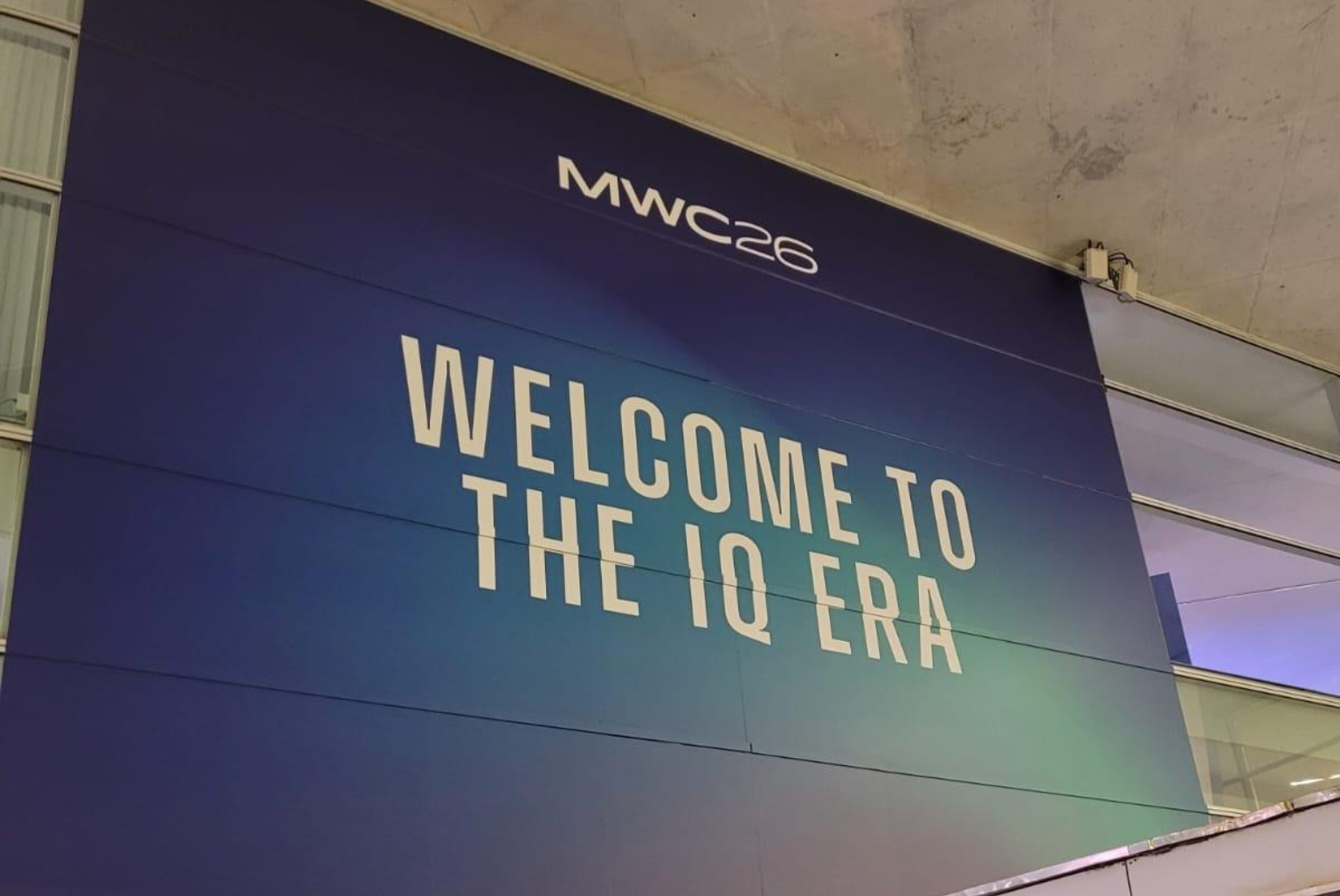
At MWC Barcelona 2026, a shift in an era became evident: Artificial intelligence has moved beyond being an aspirational topic to become an operational necessity.The discussion focused less on what technology might be able to do “someday,” and more on what it is doing today—in production—and under what conditions. The emphasis shifted toward implementation, impact measurement, and risk management. Put simply: less fascination, higher standards.
The most interesting thing was seeing that the market no longer rewards rhetoric. It rewards the ability to integrating technology into the business without disrupting operationsAnd that idea manifested in many forms: continuity, traceability, compliance, security, quality, governance. Everything that, for years, was considered “the next chapter” is now the starting point.
The new standard: scale, measure, and govern
In conversations with executives, clients, and partners, a tension that defines 2026 kept coming up: the need to accelerate, but with controlOrganizations want productivity and efficiency in the short term, but they have learned—sometimes through their own experience—that speed without a methodology comes at a high cost: rework, incidents, technical debt, security risks, or initiatives that never scale.
That is why the dominant question is no longer whether “we should use AI,” but rather: How do we take AI to production and demonstrate measurable impact?
And with a second, inseparable question: How do we govern it—data, security, and compliance—to sustain results without turning it into a risk?
Three signs that became firmly established in Barcelona
Three signs that became firmly established in Barcelona
The first one was a Implementation-oriented AIThe enthusiasm remains, but the evaluation standard has shifted: there is an expectation of genuine integration with existing processes, data, and systems, as well as impact metrics that can be sustained.
The second was the automation as a lever for productivity, not as an isolated project. The pressure for efficiency is driving the automation of operations, the reduction of friction, and the scaling of capabilities—especially where bottlenecks are an everyday occurrence.
The third was the prominence of the security and digital trustAs data usage grows and decision-making becomes automated, difficult questions also arise: attack surface, compliance, privacy, reputation, and continuity. By 2026, security will no longer just “accompany” the process: defines what can be done and how.
Five priorities that currently shape the executive agenda
Within this framework, five business priorities emerged that appeared time and again:
- Measurable impact within short timeframes (productivity, efficiency, and concrete operational improvements).
- Scale the implementation (from pilot projects to solutions integrated into day-to-day operations).
- Security as a cross-cutting concern, not as a control at the end of the process.
- Optimization of structures and talent, incorporating capabilities flexibly without compromising quality.
- Governance and control: data, compliance, and responsible use as a foundation for sustaining the transformation.
It is not a “technological” agenda: it is a business agenda with technical implications.
Four capabilities that turn transformation into sustainable results
When conversation shifts to execution, certain capabilities cease to be merely “desirable” and become decisive:
- Automation, because it reduces friction, simplifies, and improves operational consistency.
- Software quality, because it enables speed without compromising stability or increasing the need for rework.
- Cybersecurity, because it sustains trust, protects continuity, and safeguards reputation.
- Applied innovation, because it prevents ideas from remaining in the laboratory: it brings them to real-world adoption and metrics.
The key is that these capabilities do not compete with each otherToday, the expectation is for the following to coexist: automating with quality, innovating with security, and scaling with governance.
The question left behind by MWC Barcelona 2026
If MWC Barcelona 2026 left one conclusion, it is this: Competitive advantage will not lie in who adopts the most tools, but in who manages to implement them best.With clear metrics, accountability for results, and a framework of trust that enables scaling.
In 2026, the race isn't about "having AI." It's about to operate on her: putting it into production, sustaining it, and turning it into value without turning it into a risk.
Por Vanesa Orciuoli
Gerente Comercial, Ecosistemas Global