Ecosistemas Global presents its 2026 Trends Report: automation evolves toward operational intelligence

The first global report of the year warns that the integration of AI into business processes will be key to sustaining competitiveness in the coming years.

Ecosistemas Global presents its Intelligent Process Automation (IPA) Trends Report 2026, a comprehensive analysis that examines how automation is shifting from being a tool for efficiency to becoming a strategic capability based on artificial intelligence, data, and process redesign.

The report identifies a turning point in organizations: automation is no longer limited to executing tasks, but is beginning to interpret, learn, and make decisions, expanding its impact in critical areas of the business.

Among the main findings, it is highlighted that the 86% of organizations expect artificial intelligence to transform their business by 2030while global investment in AI would reach US$632.000 millions in 2028.

Furthermore, the advancement of generative AI is accelerating this transition, enabling the automation of more complex processes and reducing implementation times.

“Today, the difference lies not in who automates the most, but in who manages to translate that automation into a real business impact. Intelligence applied to operations is what will define competitiveness,” he noted. Rodrigo Cabot, Gerente de I+D de Ecosistemas Global.

The report also warns that the main challenge is not technological, but structural: a persistent gap between adoption and impact, especially in markets where implementation is not accompanied by a redesign of processes, strategy, and organizational capabilities.

In this context, Ecosistemas Global concludes that intelligent automation is no longer an emerging trend, but a structural condition of the business, where the competitive advantage will lie in how it is implemented, integrated, and scaled.

Download the full report or coordinate an interview with spokespersons.

The new scale of energy: why the transformation is also technological 
La IA en las organizaciones: el verdadero desafío es cultural
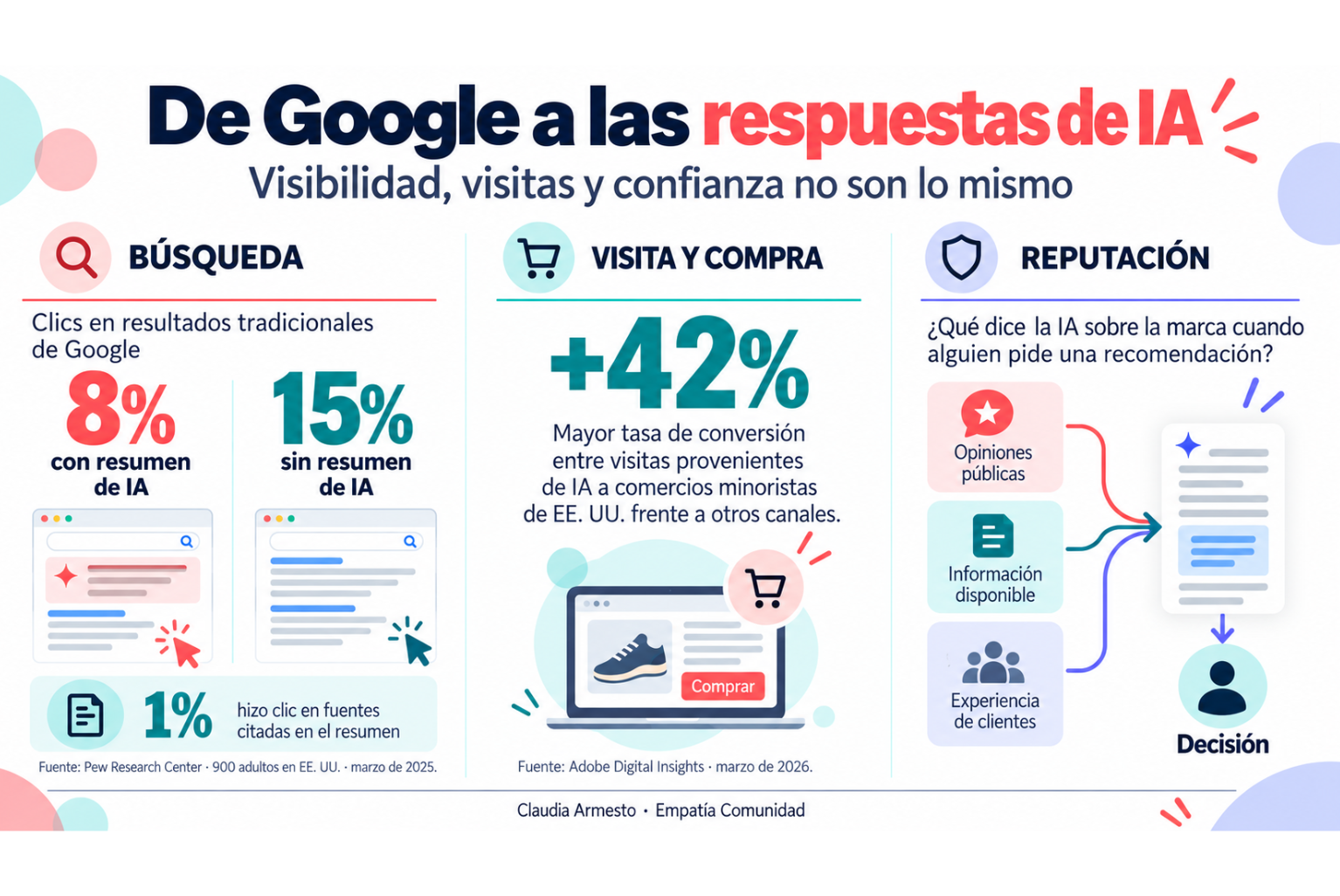
De Google a las respuestas de IA: ¿quién construye hoy la reputación de una marca? 

Privacy Policy

Empatía Comunicación S.A., operating under its registered brand Empatía Comunidad, is committed to protecting the privacy of personal data collected through its online services, in accordance with principles of transparency, legality, and security.

Use of cookies

This website uses cookies to improve the user experience. By continuing to browse, you agree to the use of cookies.

Confidentiality

We do not share personal information without consent, except when required by law. Data is used solely for the purposes outlined on our platforms.

Security

We implement appropriate technical and organizational measures to protect your information.

Children’s data

We do not knowingly collect personal data from minors without the consent of their parents or legal guardians.

Terms and conditions of use

These Terms and Conditions govern access to and use of the Empatía Comunidad website, operated by Empatía Comunicación S.A.

By accessing or using this website, users acknowledge that they have read, understood, and accepted these terms.

1. Permitted use

The website may only be used for lawful purposes and in compliance with applicable laws.

2. Intellectual property

All content on this website is the property of the Company or licensed third parties. Unauthorized reproduction is strictly prohibited.

3. Liability

The Company shall not be liable for any damages arising from the use of the website or from technical interruptions or errors.

4. External links

This website may contain links to third-party websites. The Company is not responsible for their content or terms of use.

5. Amendments

These terms may be updated at any time. Users are encouraged to review them periodically.

Cookie Policy

This website uses cookies to enhance user experience, analyze traffic, and personalize content.

What are cookies?

Cookies are small files that are stored on your device when you access a website. They allow your preferences to be remembered, your experience to be personalized, and statistical data to be collected.

Types of cookies we use

  • Technical cookies: necessary for the basic functioning of the site.
  • Analysis cookies: to understand how the site is used and improve its operation.
  • Personalization cookies: to adapt the content to your interests.
  • Third-party cookies: such as social networks or external analysis services.

How to manage them?

You can configure or disable the use of cookies from your browser. Please note that by deactivating them, some functions of the site may not operate correctly.